
When replacing the machine is not an option
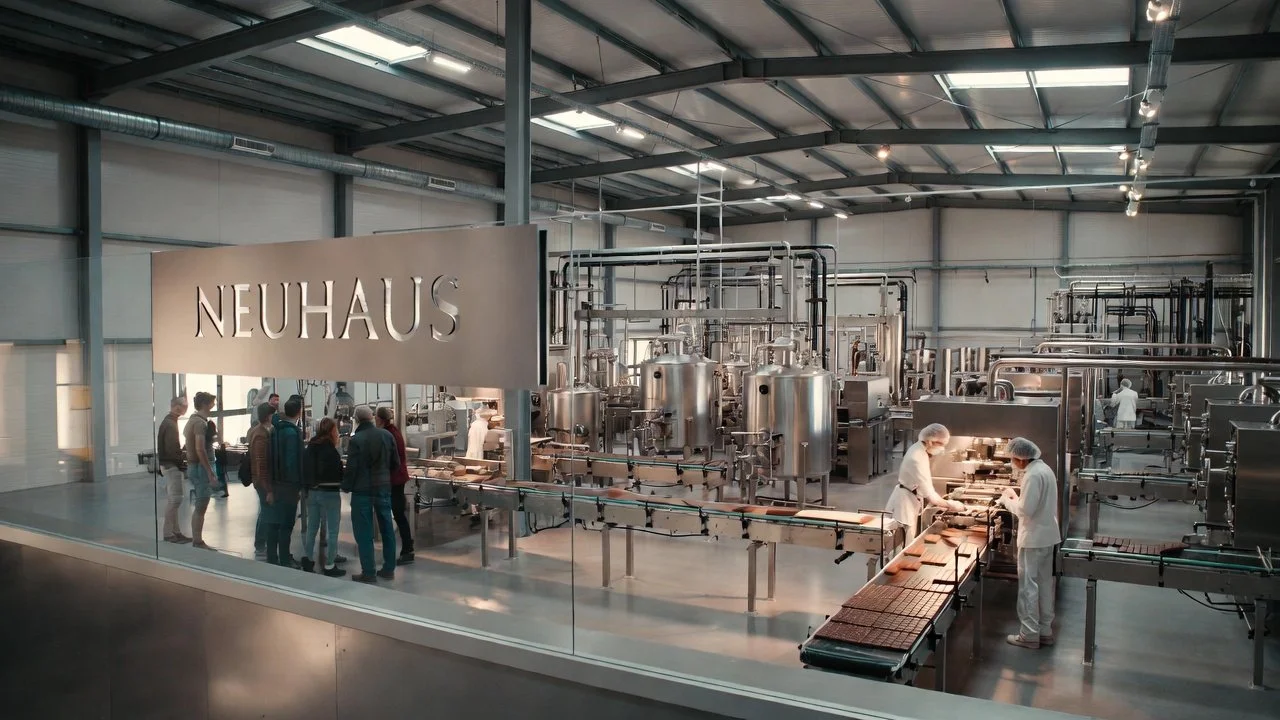
Context
In food production, legacy equipment often remains in operation far beyond its original design life. These machines are deeply integrated into production lines, and replacing them can be impractical due to downtime, cost, or process dependencies.
In this project, Talenco supported Neuhaus in extending the safe operational life of an existing chocolate production machine that had been in service for decades.
The challenge
The machine was fully mechanically timed, with all motions synchronised through shafts, cams, and linkages. While this architecture had proven robust, several non-standard components had reached the limits of their service life.
Wear in these parts introduced a contamination risk that could no longer be accepted in a food production environment. At the same time, replacing the machine or fundamentally altering its timing concept was not an option.
Engineering constraints
Because the system relied entirely on mechanical timing, any modification had to preserve existing motion relationships. Changes to one element could affect the behaviour of the entire machine.
This imposed clear constraints:
Timing and synchronisation had to remain unchanged
Interventions needed to be local and precisely scoped
New parts had to integrate mechanically without cascading effects
Engineering progress depended on understanding the original design intent and working within it.
Selective redesign of critical components
Rather than attempting a full retrofit, the focus was placed on redesigning specific non-standard components that posed safety and reliability risks.
These parts were re-engineered using contemporary materials and manufacturing approaches, improving durability and hygiene while maintaining their original function within the mechanical timing system.
This selective redesign approach allowed the machine to retain its proven architecture, while significantly reducing reliance on components based on 50-year-old design assumptions.
Outcome
The machine was returned to production with reduced contamination risk and improved operational reliability. Importantly, this was achieved without extended downtime and without compromising the mechanical integrity of the original system.
By addressing only the components that required intervention, production continuity was maintained and future maintenance risks were reduced.
Closing perspective
In industrial environments, progress does not always mean replacing legacy systems. Sometimes it means recognising which parts must change—and which must remain untouched.
Extending the safe life of mechanically timed equipment requires restraint, precision, and respect for the original design. In such cases, engineering judgement matters more than novelty.