
From lab setup to pilot system: what actually changes
Context
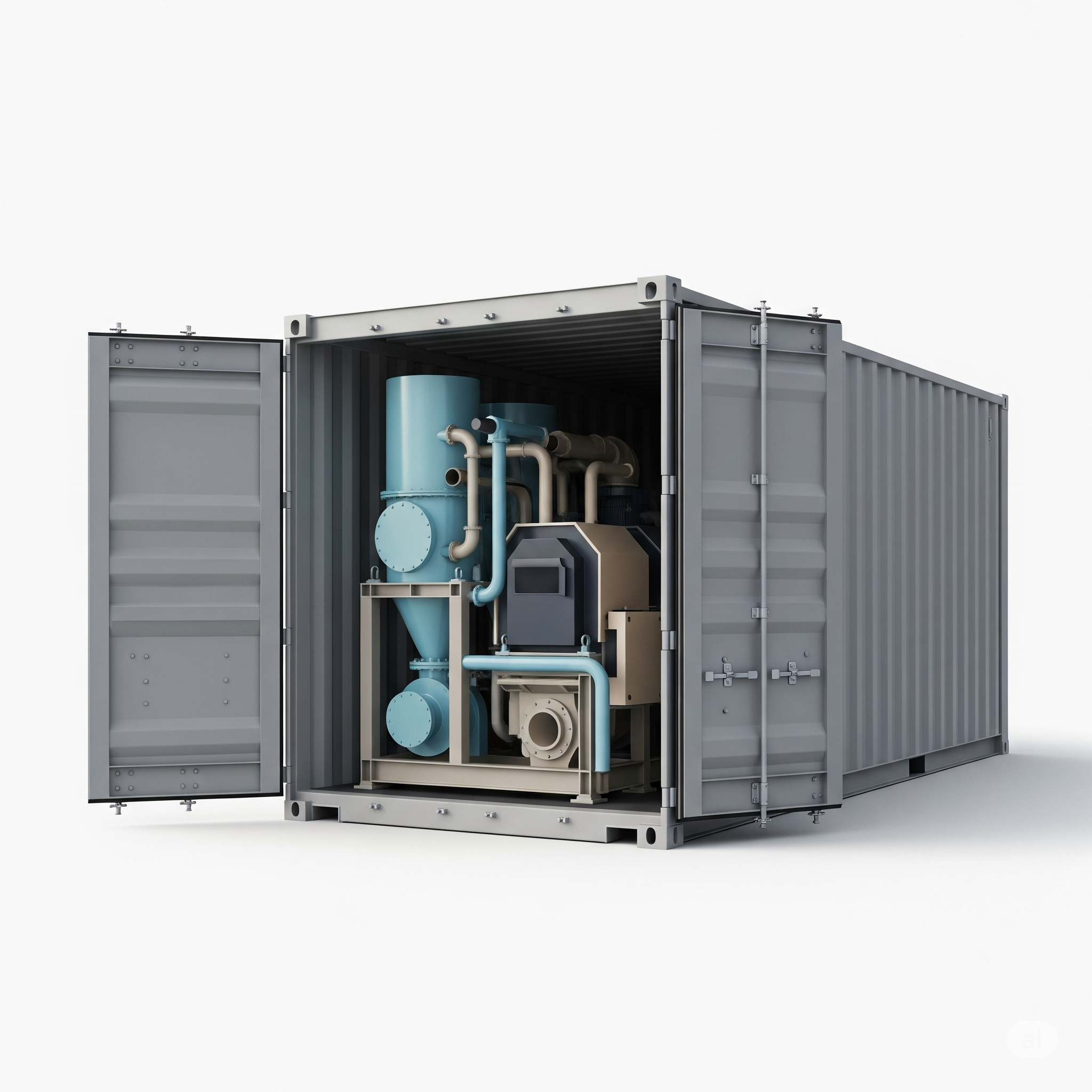
Technologies that perform well in a laboratory setting often behave very differently when moved toward pilot scale. While core principles may remain unchanged, the surrounding system—and the constraints acting on it—change substantially.
At this stage, engineering decisions are no longer driven by technical feasibility alone. Regulatory requirements, commercial expectations, and operational realities begin to shape the design space.
From experiment to system
In the lab, development is typically led by researchers. Experiments are designed to isolate effects, operating conditions are tightly controlled, and manual intervention is common.
At pilot scale, this model no longer holds. The technology must operate as a system, often continuously, and under less controlled conditions. This is the point where engineers become directly involved alongside researchers.
Rather than replacing research activity, engineering adds a complementary focus: how the system is built, operated, monitored, and maintained.
What changes first
Several aspects tend to become critical as soon as a system leaves the lab:
Operation: Manual adjustments are no longer practical. Stable control strategies and clear operating procedures are required.
Data capture: Spot measurements give way to continuous, structured logging to assess stability and support later technical and commercial decisions.
Reliability: Components suitable for short experiments may not withstand extended operation.
Compliance: Frameworks such as CE marking, PED, and ATEX begin to constrain layout, component selection, and operating envelopes.
Commercial readiness: Design choices start influencing manufacturability, serviceability, and the feasibility of a future product.
These aspects often dominate outcomes more than further optimisation of the core technology.
Engineering implications
As engineers and researchers work in parallel, the focus shifts from proving a concept to reducing uncertainty. Engineering decisions aim to preserve flexibility while avoiding choices that would limit future certification, sourcing, or production.
This does not mean finalising a product design. It means recognising that some research-driven assumptions will not survive exposure to real-world constraints—and addressing them early.
Validation at pilot scale
Validation in this phase serves both disciplines. For researchers, it reveals how the technology behaves outside idealised conditions. For engineers, it provides the information needed to assess operability, compliance pathways, and productisation potential.
This shared learning is what enables deliberate progression toward higher TRLs.
Closing perspective
The transition from lab setup to pilot system marks a shift from research-led exploration to collaborative system engineering.
When researchers and engineers engage early and in parallel, pilot-scale validation becomes a tool not just for proving feasibility, but for shaping technologies that can realistically become industrial products.