
A plasma based CO₂ recycling unit
Context
Early-stage CO₂ recycling technologies are often validated in controlled lab environments. Moving such technologies toward field deployment introduces a different set of constraints, including safety, operability, and integration into existing industrial sites.
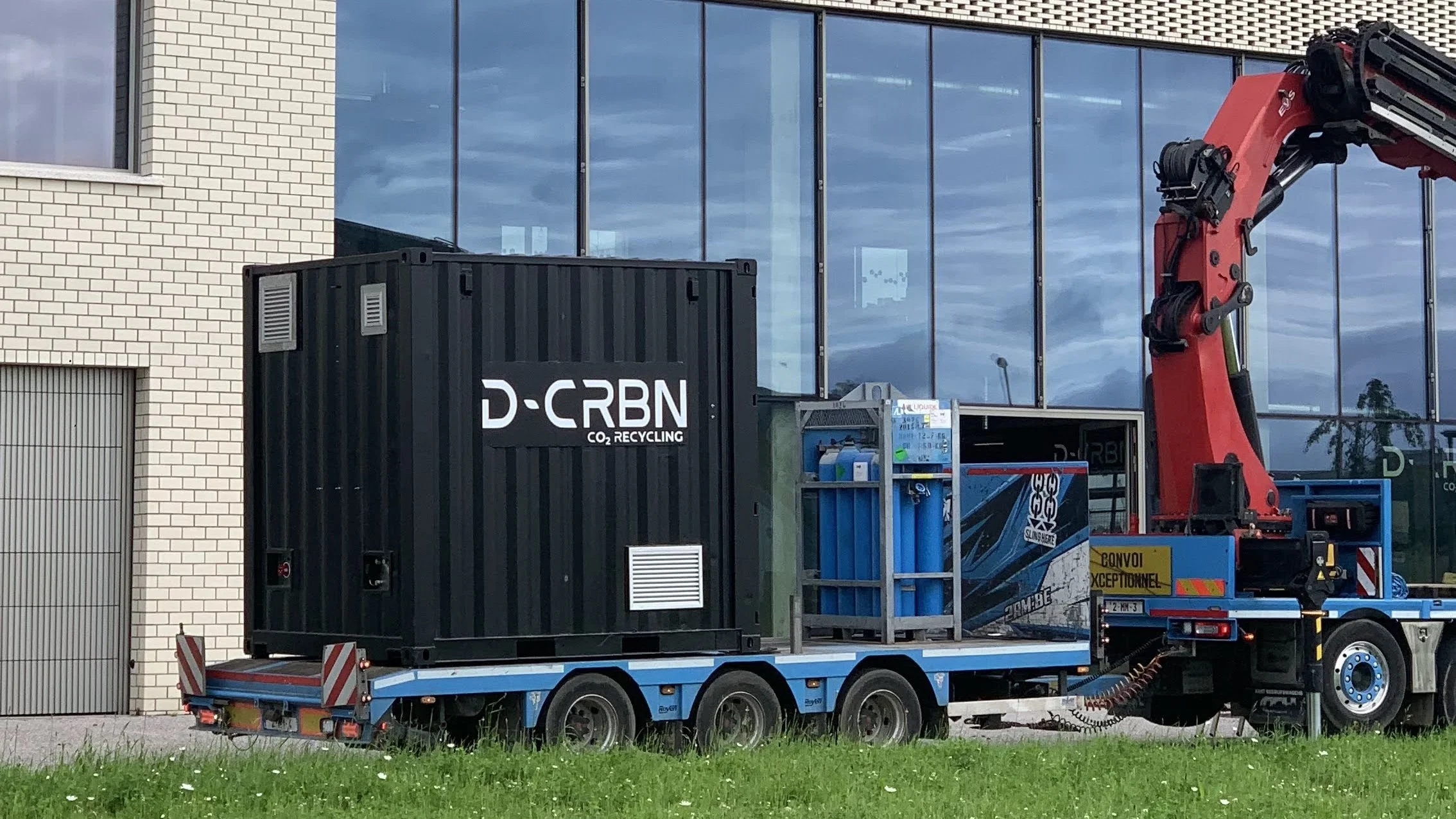
Following earlier work on a lab-scale unit, Talenco supported D-CRBN in developing a containerised pilot unit based on their plasma reactor technology. The goal was to create a system suitable for operation outside the lab, while retaining flexibility for continued development.
From lab setup to containerised pilot
Transitioning to a containerised solution introduced several design considerations. Space constraints, accessibility, thermal management, and integration of auxiliary systems all required careful evaluation.
Rather than optimising individual components, the focus shifted to system-level robustness and operability. Containerisation forced early design decisions that would later influence maintainability and scalability.
Engineering approach and safety validation
The project started with a structured scoping and budgeting phase, followed by basic and detailed engineering. To manage timelines, procurement and preliminary construction were initiated in parallel with detailed design—accepting controlled risk in exchange for earlier validation.
Given the move into an industrial environment, safety was a central consideration. The safety concept was reviewed and validated in collaboration with Vinçotte as an independent third party, ensuring operator safety in and around the unit before final design sign-off.
Testing and commissioning
During testing, several challenges emerged that could not have been fully anticipated at lab scale. These were addressed in close collaboration with D-CRBN’s team, with a focus on achieving stable operation rather than short-term optimisation.
This phase provided valuable insight into system behaviour under realistic conditions and informed subsequent design adjustments.
Operational deployment
The containerised unit has since been deployed at the ArcelorMittal site in Ghent, where it operates as a field pilot while technology development continues.
Operating the system in a real industrial context has proven essential for identifying practical constraints and guiding the next steps in the technology’s development.
Closing perspective
Moving CO₂ recycling technologies from the lab into the field requires more than scaling up core processes. Containerisation, safety validation, and system integration become decisive factors early in the transition.
Pilot-scale deployment provides the insight needed to assess not only technical feasibility, but also readiness for further industrialisation.