
Validating CO₂ recycling using an Electrolizer

Context
Electrochemical CO₂ conversion is often demonstrated successfully at lab scale. Moving beyond that stage requires validation under conditions that reflect how a system would actually be operated, monitored, and maintained.
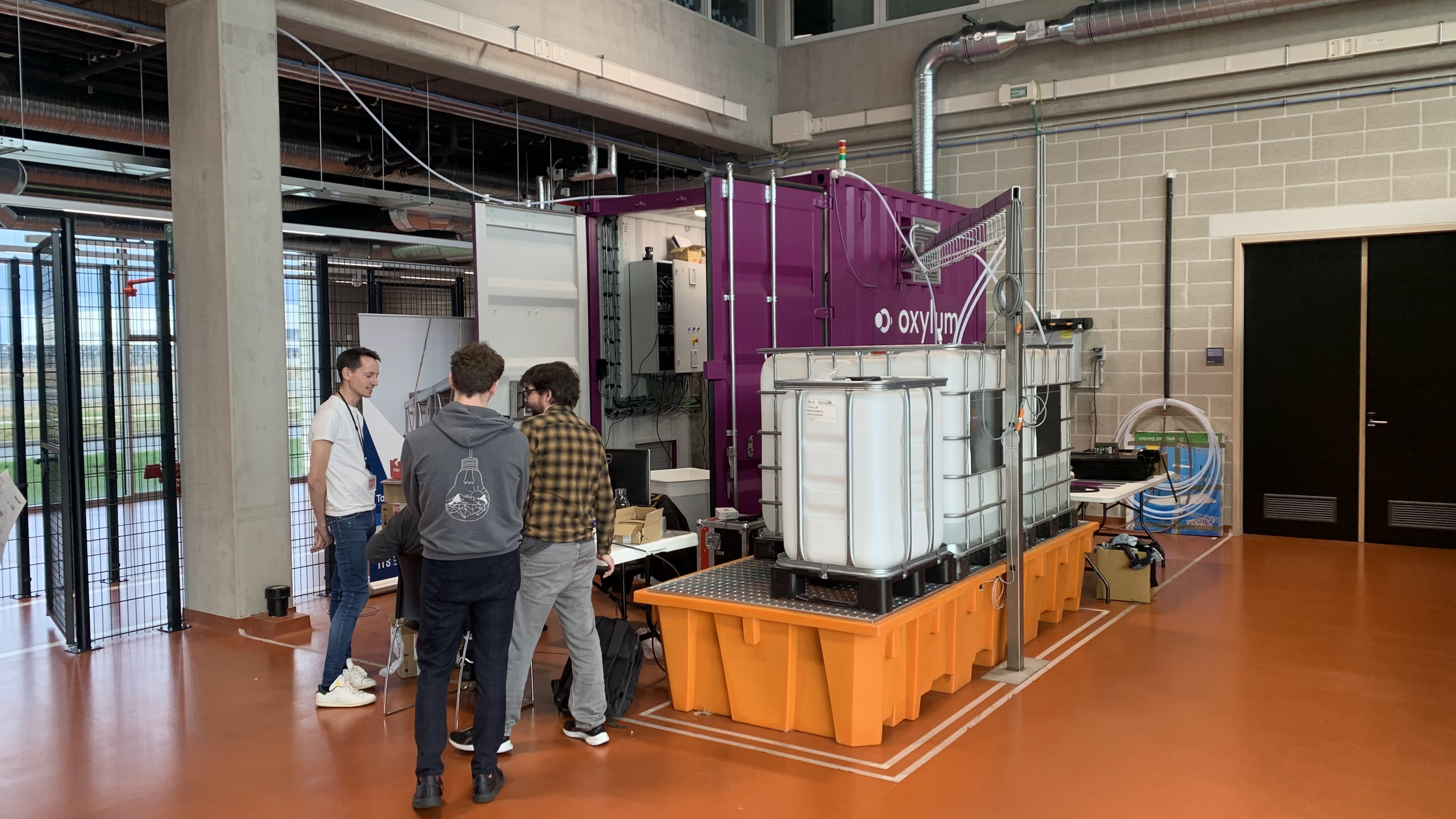
This project focused on validating a CO₂ electrolyzer in a pilot-scale, containerised setup, with attention not only to electrochemical performance, but also to system operation, data handling, and integration readiness.
From lab setup to pilot context
In laboratory environments, electrolyzers are typically operated manually, with limited interfaces and short test durations. At pilot scale, additional aspects quickly become critical: operator interaction, data availability, and the reliability of sourced components.
Placing the system in a containerised setup allowed these factors to be evaluated together, rather than in isolation.
Validation focus
The goal of validation was not to maximise efficiency, but to understand how the system behaves during extended operation and under realistic constraints. Key questions included:
How does the system respond to changing operating conditions?
How effectively can operators monitor and control the process through the HMI?
Which parameters need to be captured continuously to assess stability and performance?
Are selected components suitable for sustained operation and future scaling?
Answering these questions early helps avoid design choices that become limiting later.
HMI and data capture
A functional human–machine interface proved essential for pilot operation. Beyond basic control, the HMI needed to support clear status indication, fault recognition, and straightforward interaction during testing.
In parallel, structured data capture was critical. Logging electrical, thermal, and process parameters enabled trends to be identified over time and provided the basis for evaluating system stability rather than isolated performance points.
These aspects are often underestimated at lab scale but become central when moving up the TRL ladder.
Component sourcing and system robustness
Operating the system continuously highlighted the importance of component selection. Availability, lead times, and robustness of sourced components influenced both system reliability and future scalability.
Validating these choices at pilot scale helps distinguish components that are acceptable for experimentation from those suitable for more permanent or scaled deployments.
Role of validation in TRL progression
At this stage, validation serves to reduce uncertainty rather than to certify a final design. The insights gained inform which parts of the system can be refined incrementally and which require more fundamental redesign before further scaling.
This learning-focused approach supports deliberate, stepwise progress toward industrial readiness.
Closing perspective
CO₂ recycling technologies are often assessed on their theoretical potential. Real progress depends on how systems perform when operated, monitored, and maintained under realistic conditions.
Pilot-scale validation provides that insight—bridging the gap between laboratory results and industrial reality.